Season 2
24 episodes · 2017
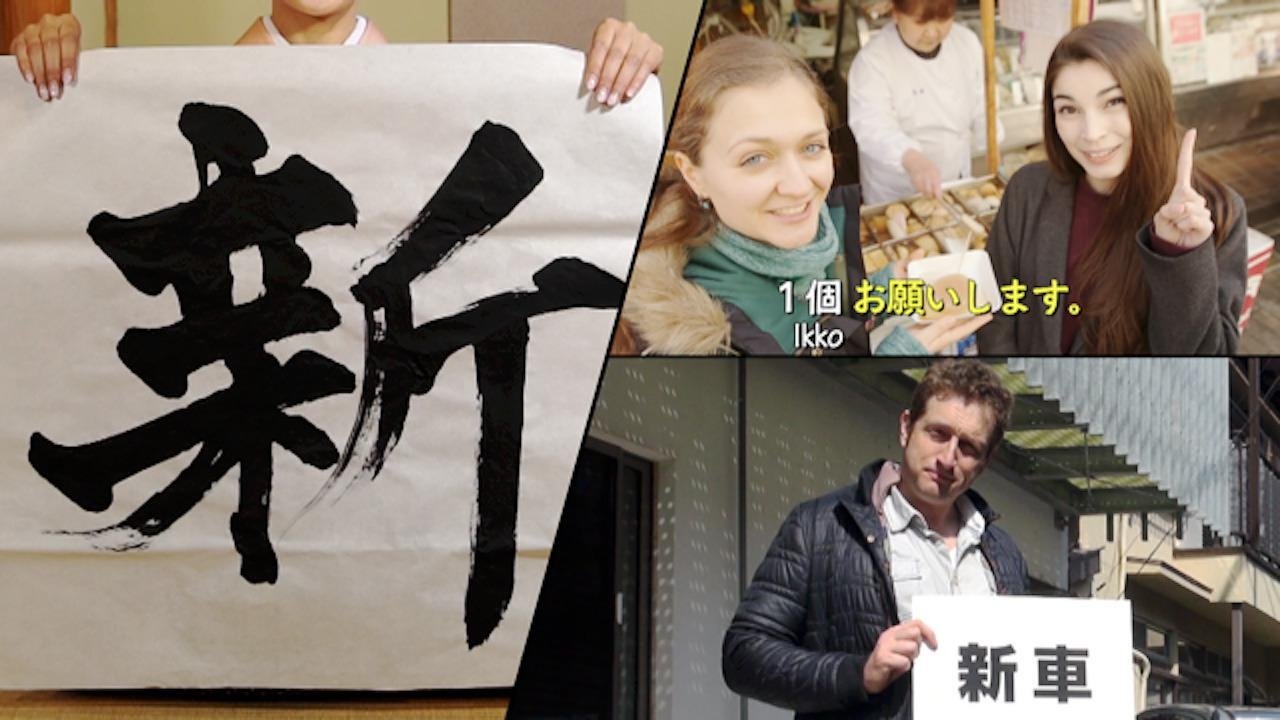
1Shinjuku, please
Today we'll learn how to ask or request something.
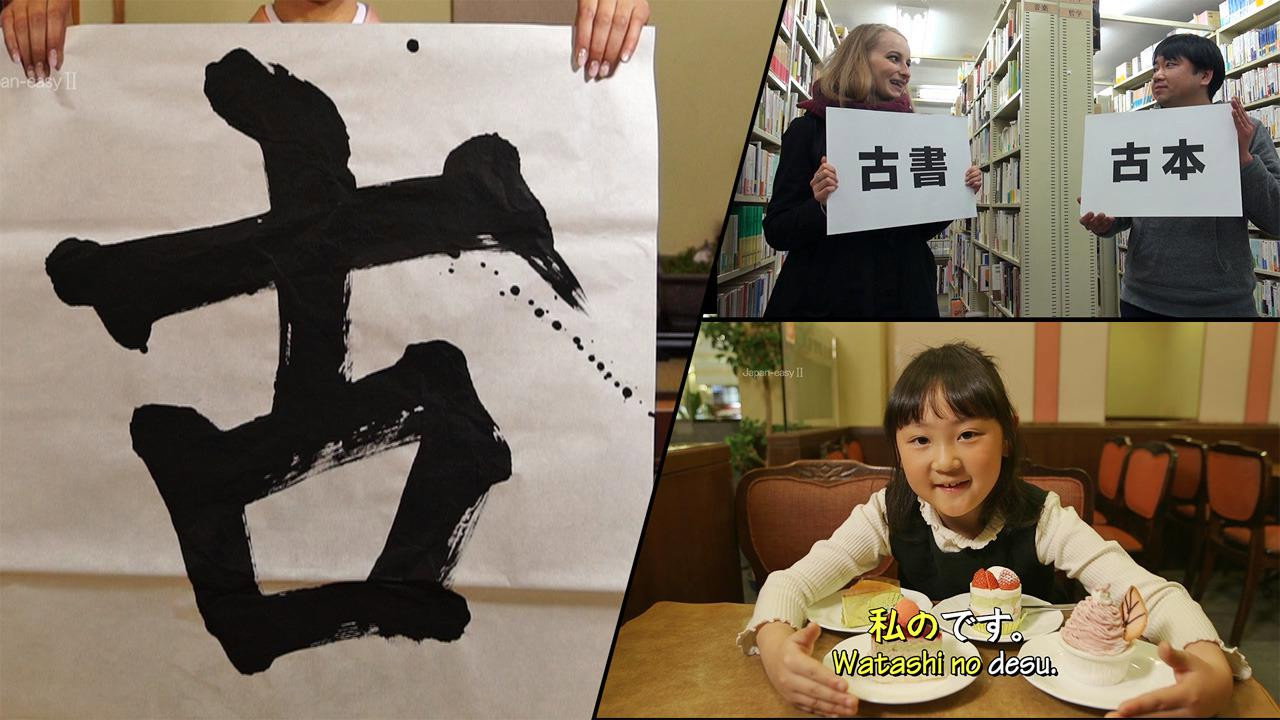
2This is mine
Today, we'll learn how to say that something is yours.
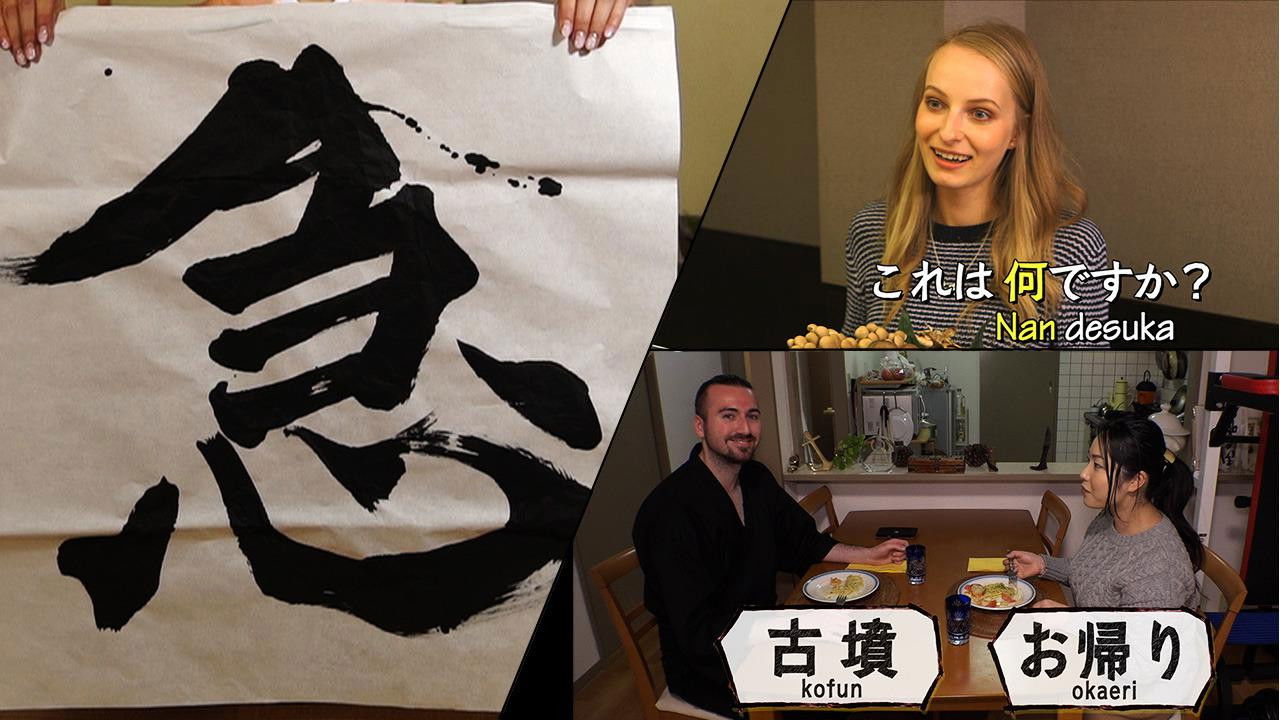
3What is this?
In today's program, we'll learn how to ask what something is. We'll also learn 3 pronouns words: kore, are and sore, meaning this, that and it.
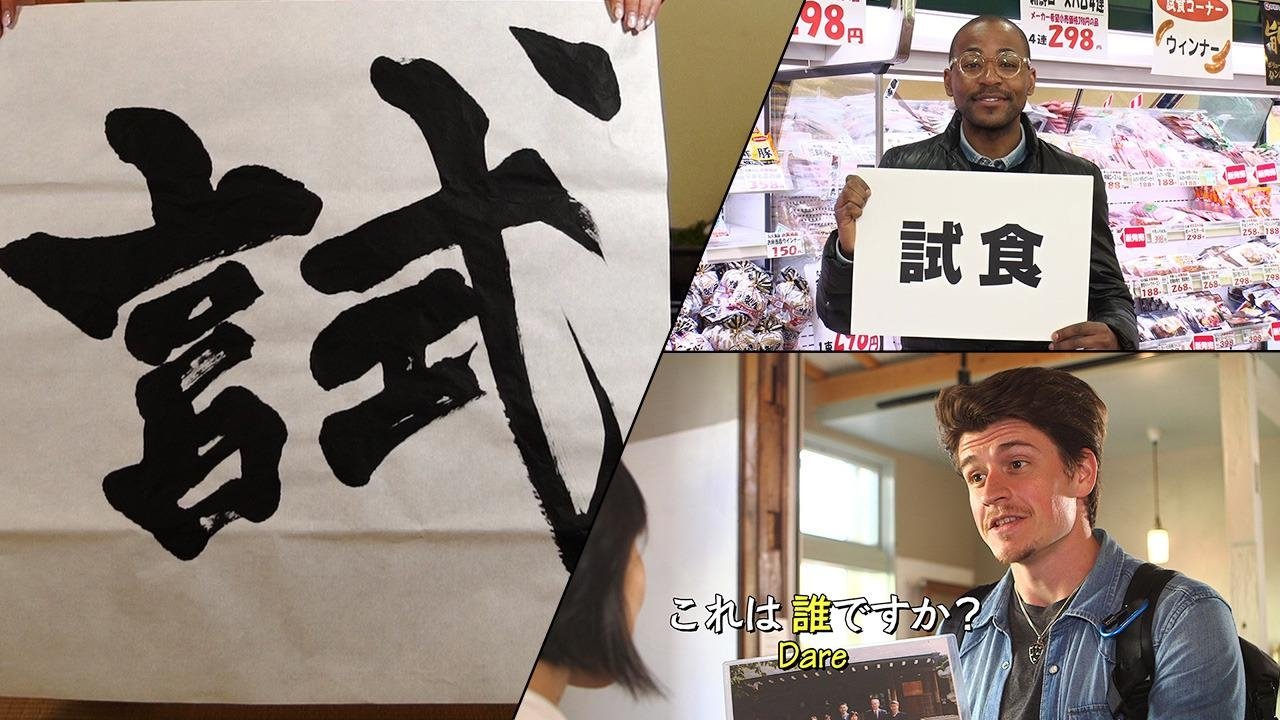
4Who is this?
In this episode, we'll discover the various situations where we say "Who is this?" in Japanese. Let's notice that the phrase is different from when asking people in front of you and when asking when not.
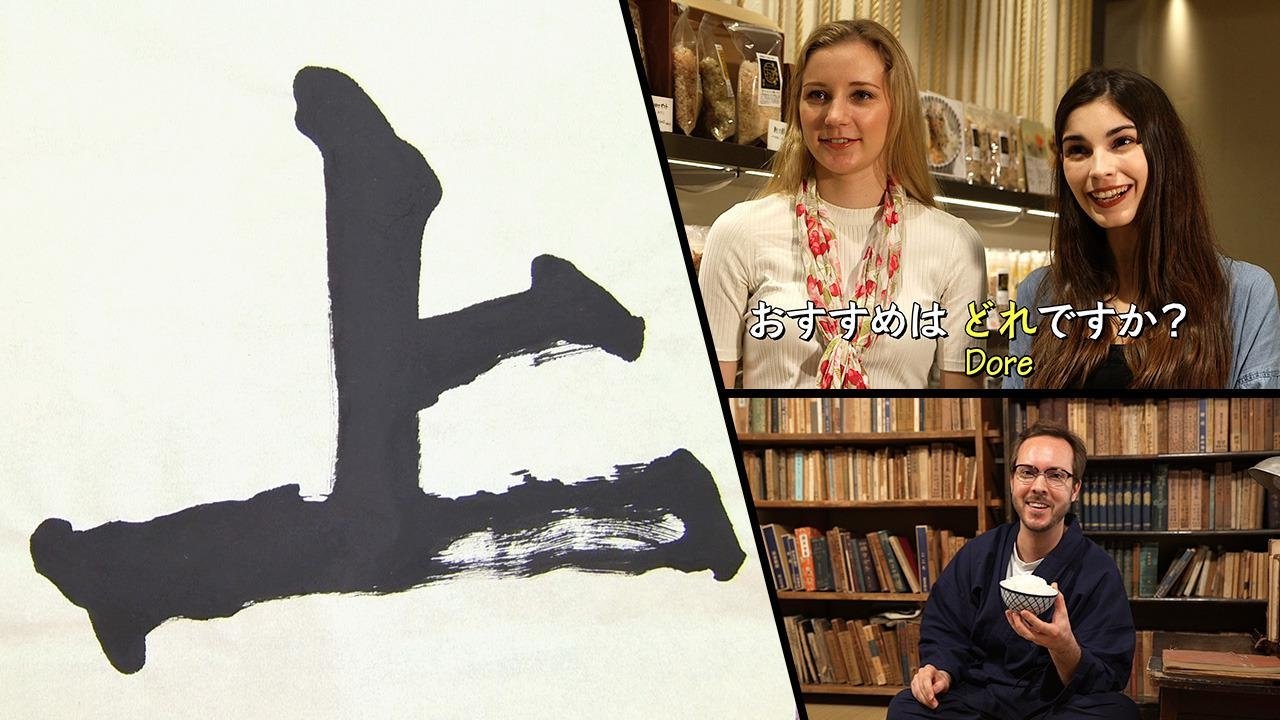
5Which is your recommendation?
In this episode, we learn how to ask for a recommendation about what to eat or buy. This one convenient expression can help you make the best decision at restaurants and when traveling or shopping.
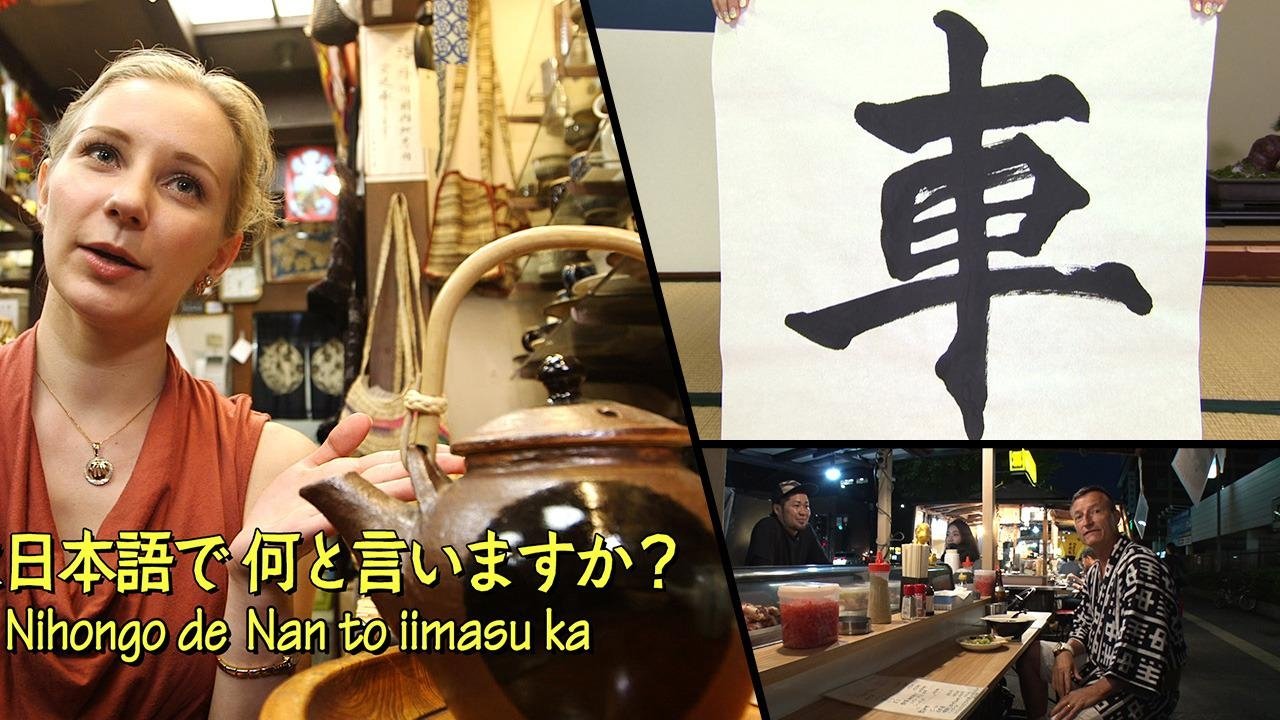
6How do you say this in Japanese?
Maybe you know what something is, but do you know how to say it in Japanese? Today let's learn what to say in such a situation. This is going to help you ask a lot of questions, and that's a great way to build your vocabulary.
7How much is this?
When you travel around Japan, you will want to know how much things cost. Just say “Kore wa ikura desuka?” and people will tell you how much you have to pay.
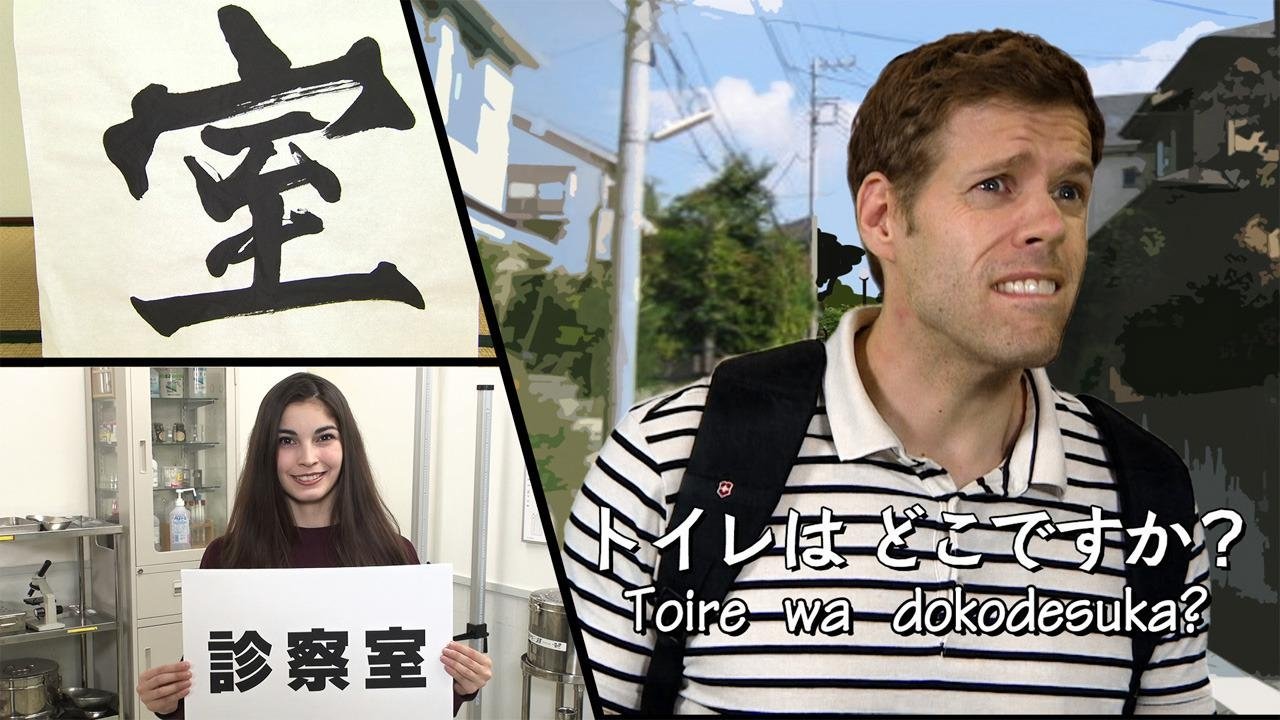
8Where is the restroom?
The phrase "Doko desuka?" means “Where is …?” This is a question you can use when you want to ask for directions. In this episode, we’ll learn how to ask where the restrooms are.
9When is it?
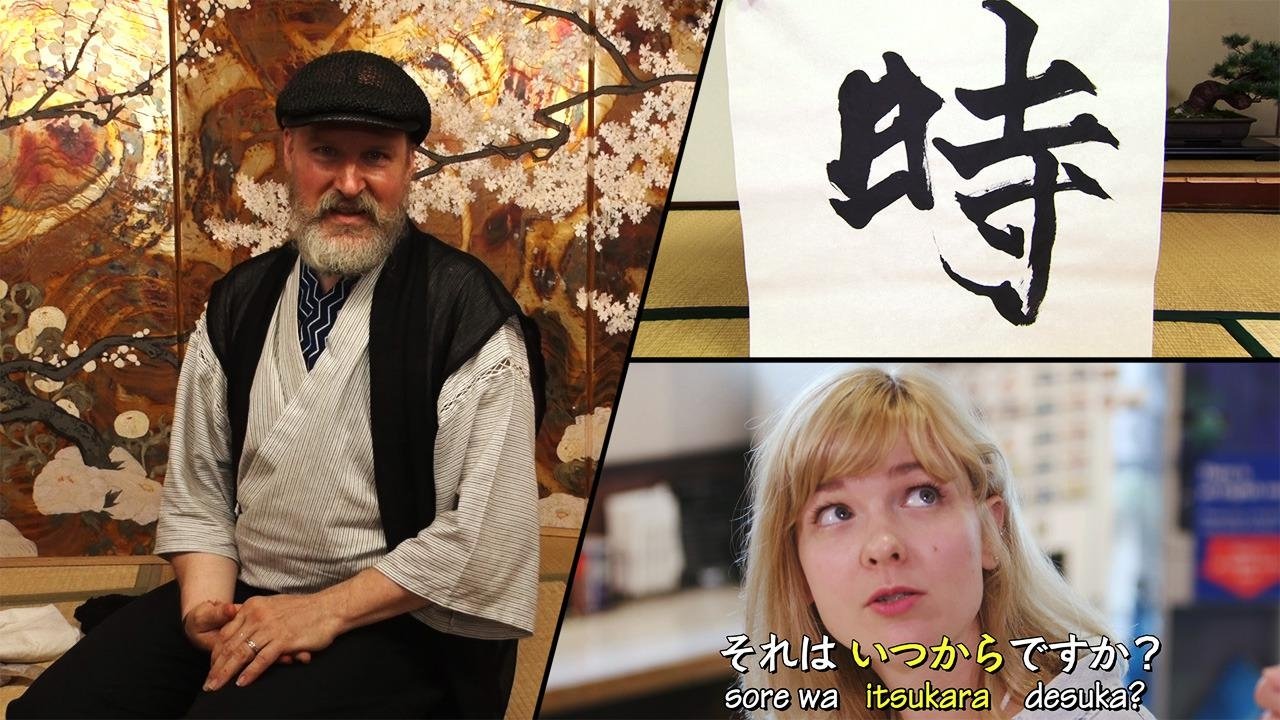
In this episode, we'll learn a question: "Sore wa itsu desuka?" We use this to ask when something is going to happen. We'll also learn about 3 kanji: 時 (time), 投 (throw) and 打 (strike / hit).
10Is it near here?
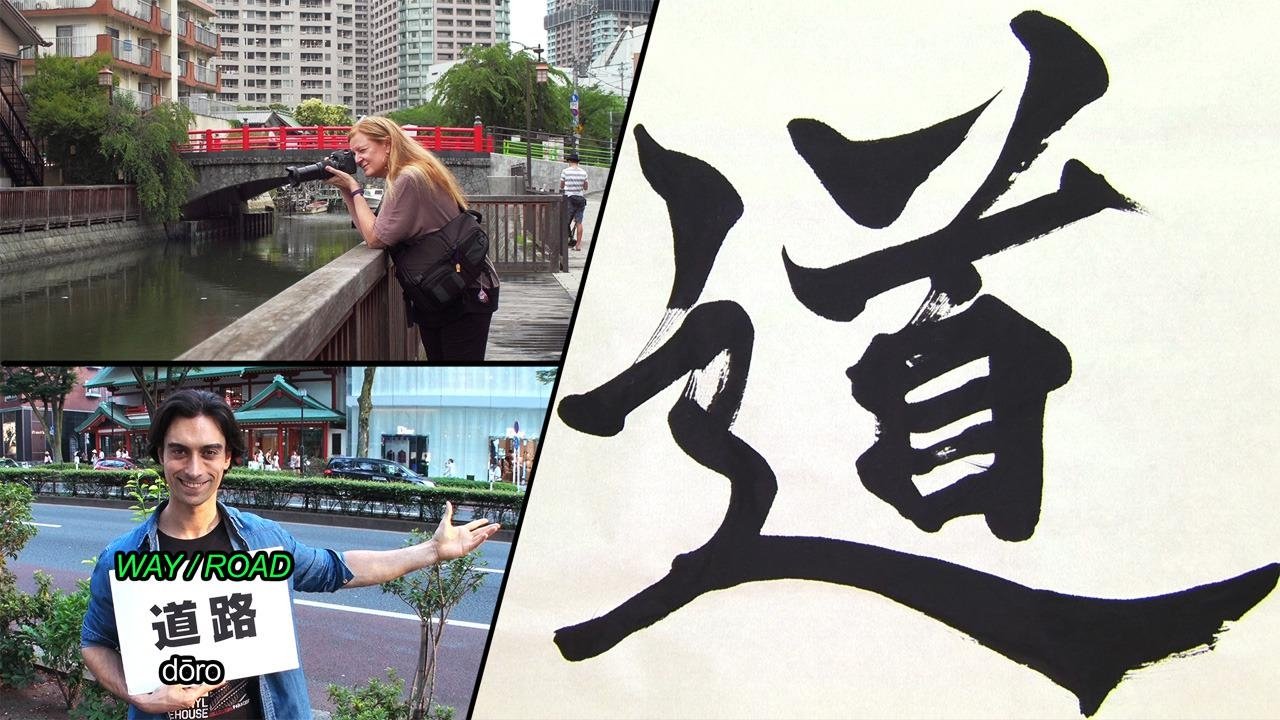
In this episode, we'll learn the question "Koko kara chikai desuka?" We use this to ask if something is nearby. We'll also learn 3 kanji: 道 (way), 歩 (walk) and 走 (run).
11How long will it take?
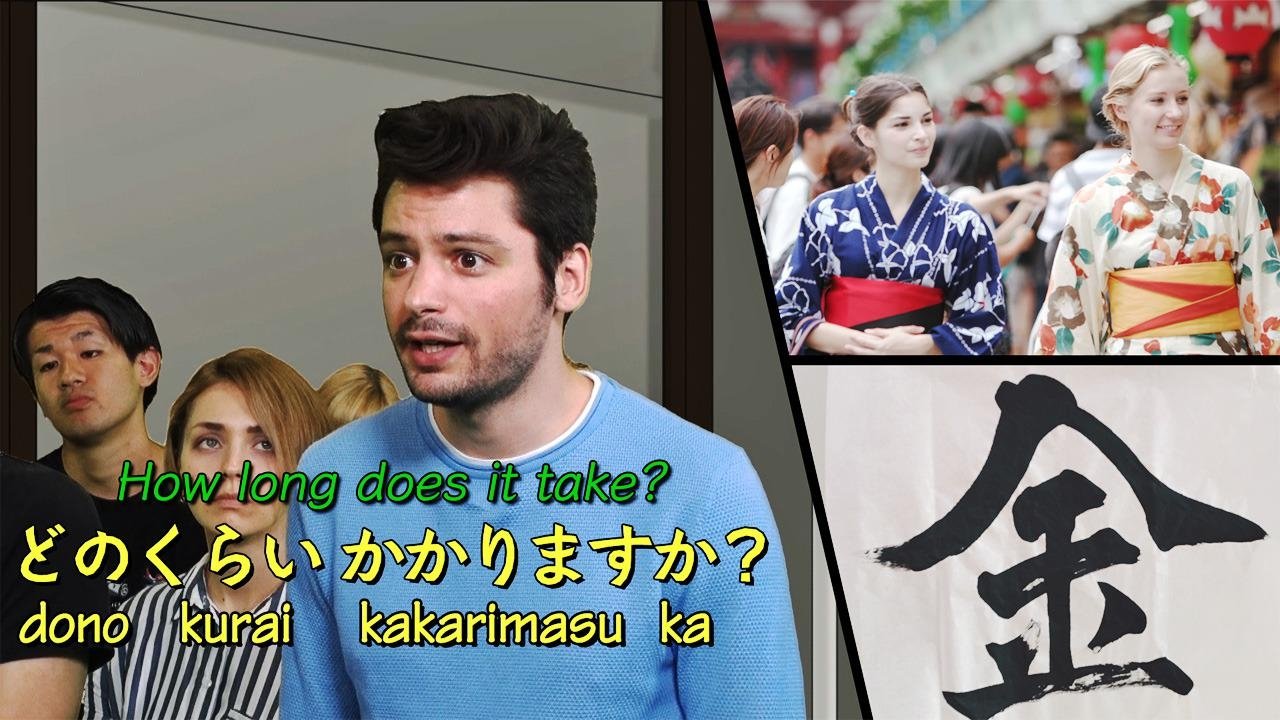
In this episode, we'll learn the question "Dono kurai kakarimasu ka?" We use this to ask how much time or money something takes. We'll also learn about 3 kanji: 金 (money), 近 (near) and 遠 (far).
12Does this bus go to Shibuya?
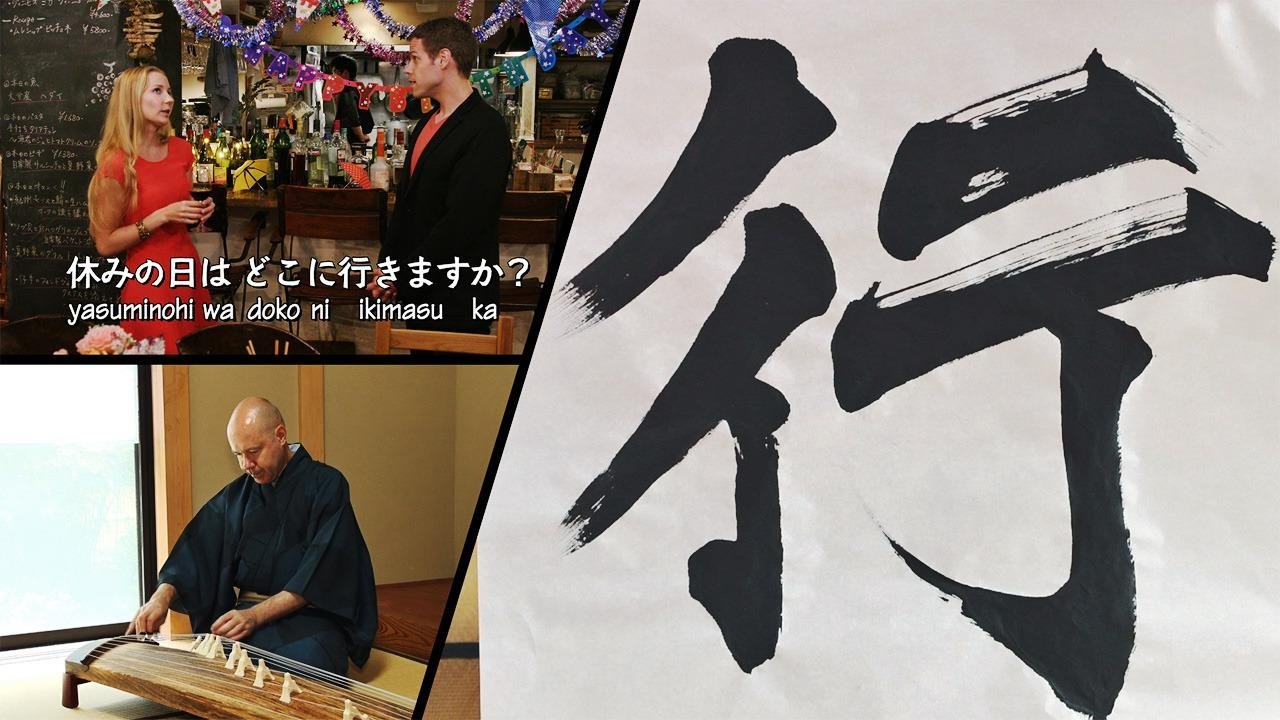
In this episode, we'll learn the question "Kono basu wa Shibuya e ikimasu ka?" We use this to ask if a person or a vehicle goes to a certain destination. We'll also review the phrases we've learned in the past episodes. The kanji we'll learn are: 行 (go), 右 (right) and 左 (left).
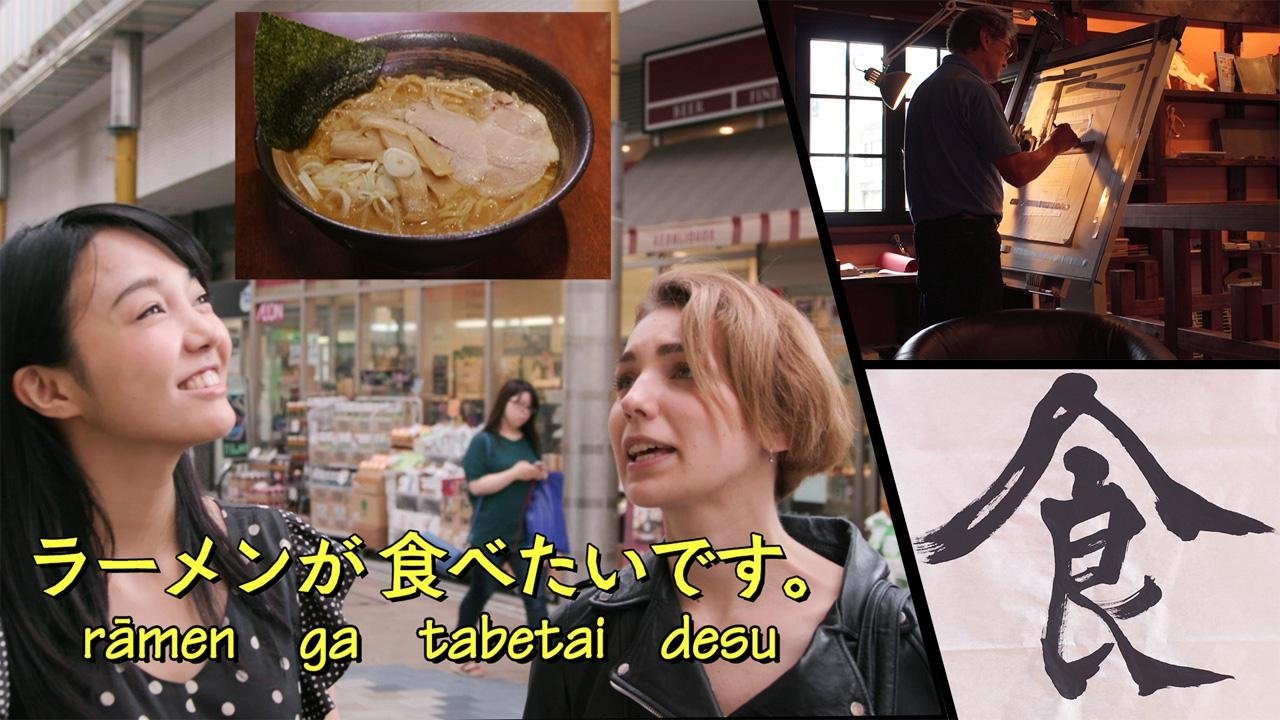
13I want to eat ramen
Today we'll learn how to express what we want, like when you want to eat something or when you want to ride a train. We'll also learn how to say the negative forms, like when you don't want to eat something.
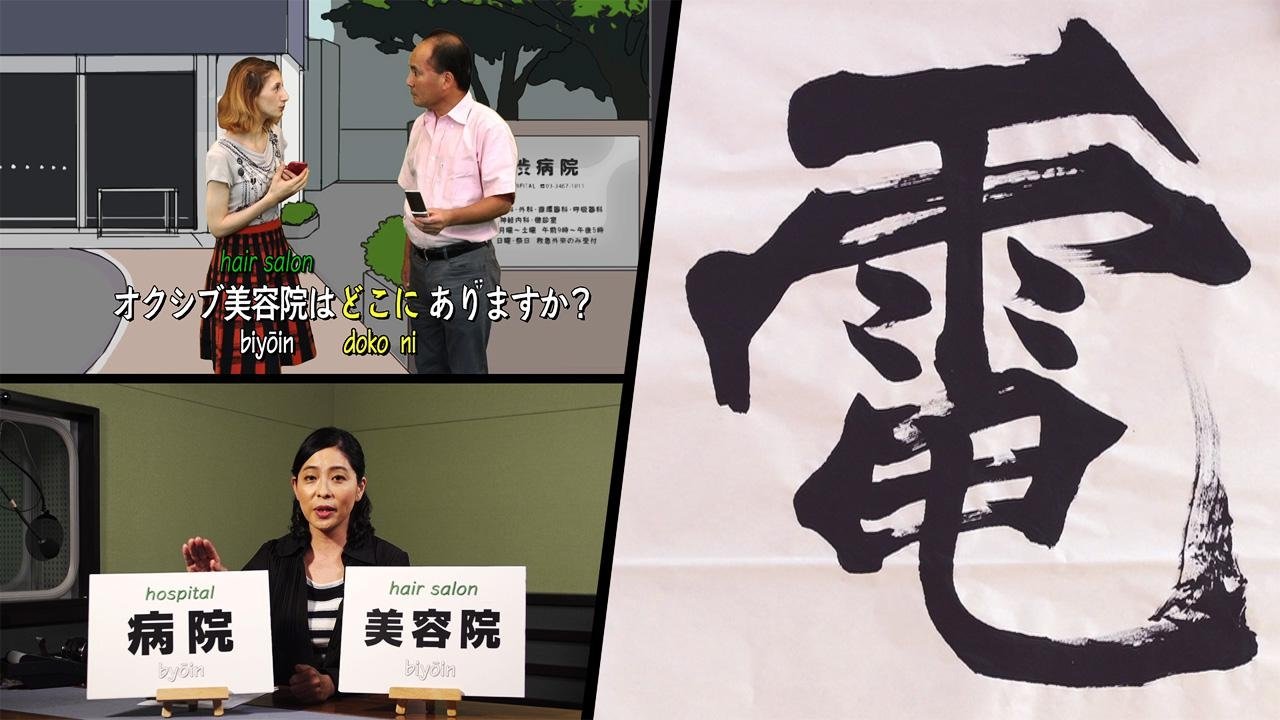
14Do you have miso ramen?
Today, we'll learn how to ask for what you're looking for. You can use this sentence when asking for a menu at a restaurant, or when you're looking for a particular size and color at a clothes store.
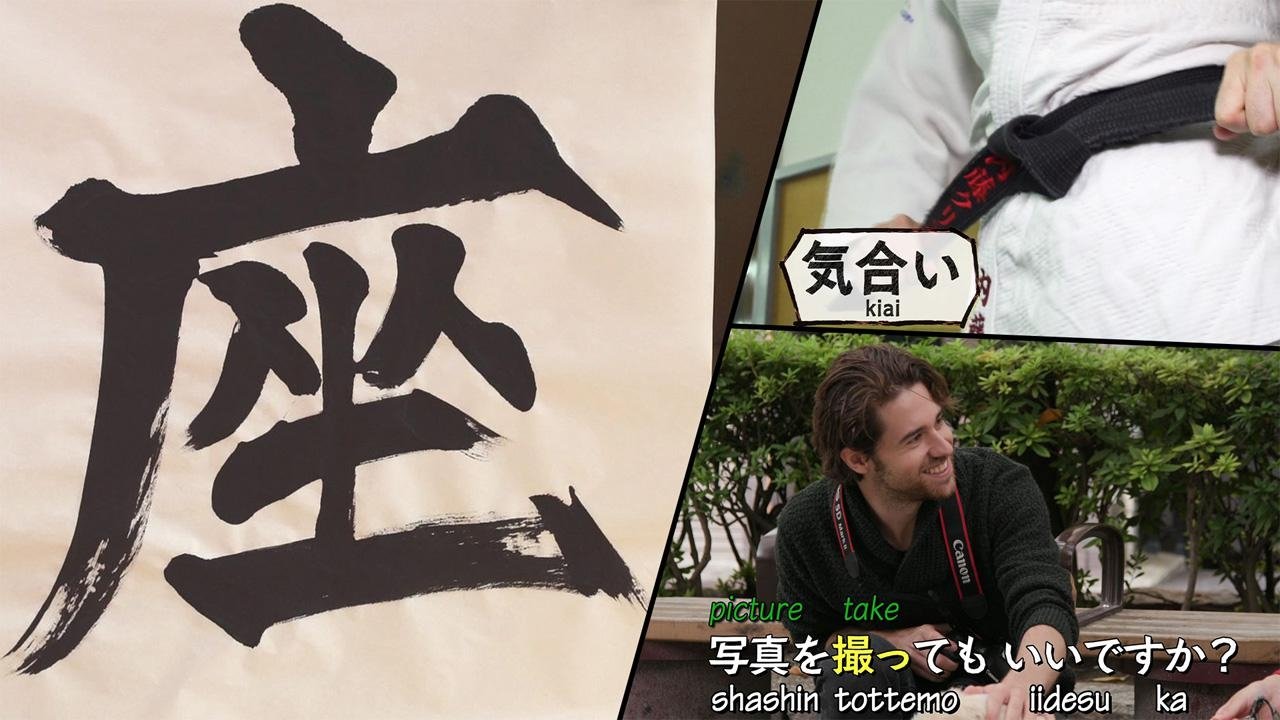
15May I sit down?
In this episode, we'll learn the phrase "Suwattemo iidesu ka?" It's useful when you want to ask someone for permissions. You can use it, for example, when you want to sit in an empty seat or when you want to turn on the air conditioner. And for today's kanji, we'll learn about the kanji that means "sit".
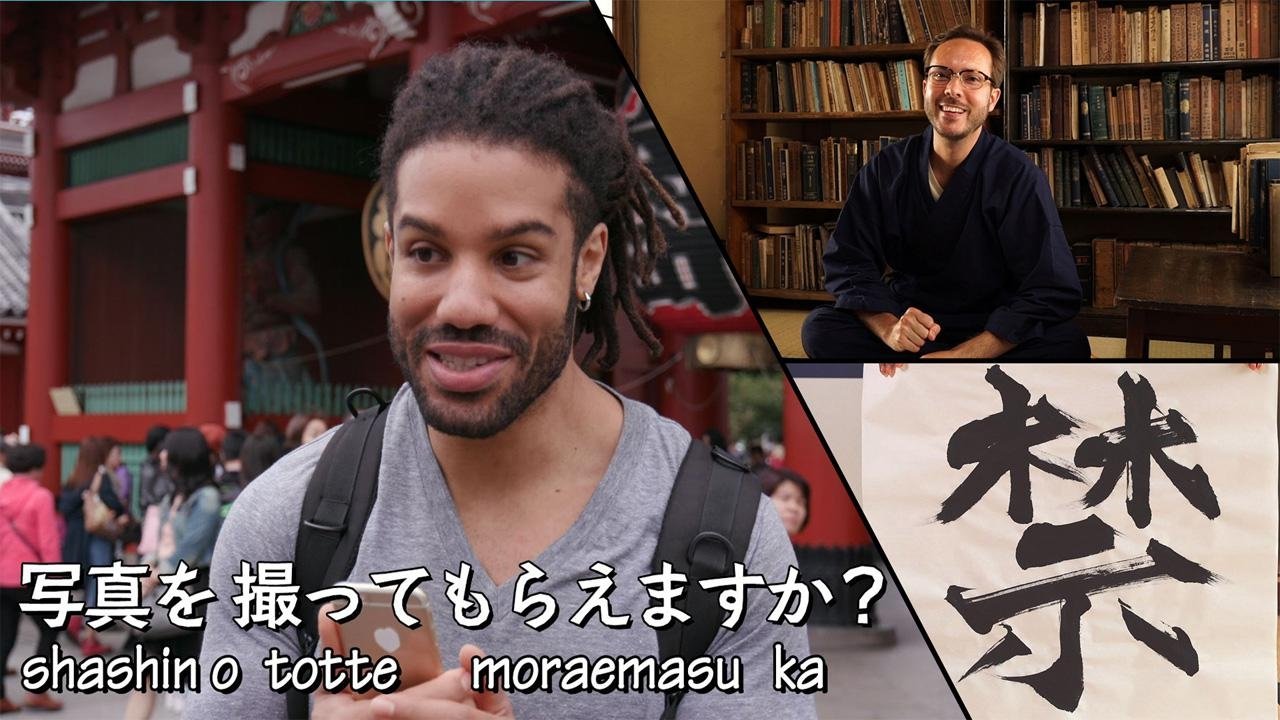
16Could you take my picture?
In this episode, we'll learn the phrase "Shashin o totte moraemasu ka?" This is a useful phrase when requesting someone to do something for you. You can use it, for example, when you ask someone to take your picture at a tourist spot, or when want to borrow an umbrella from a hotel. And for today's kanji, we'll learn about the kanji that means "don't" or "banned".
17Can I change money here?
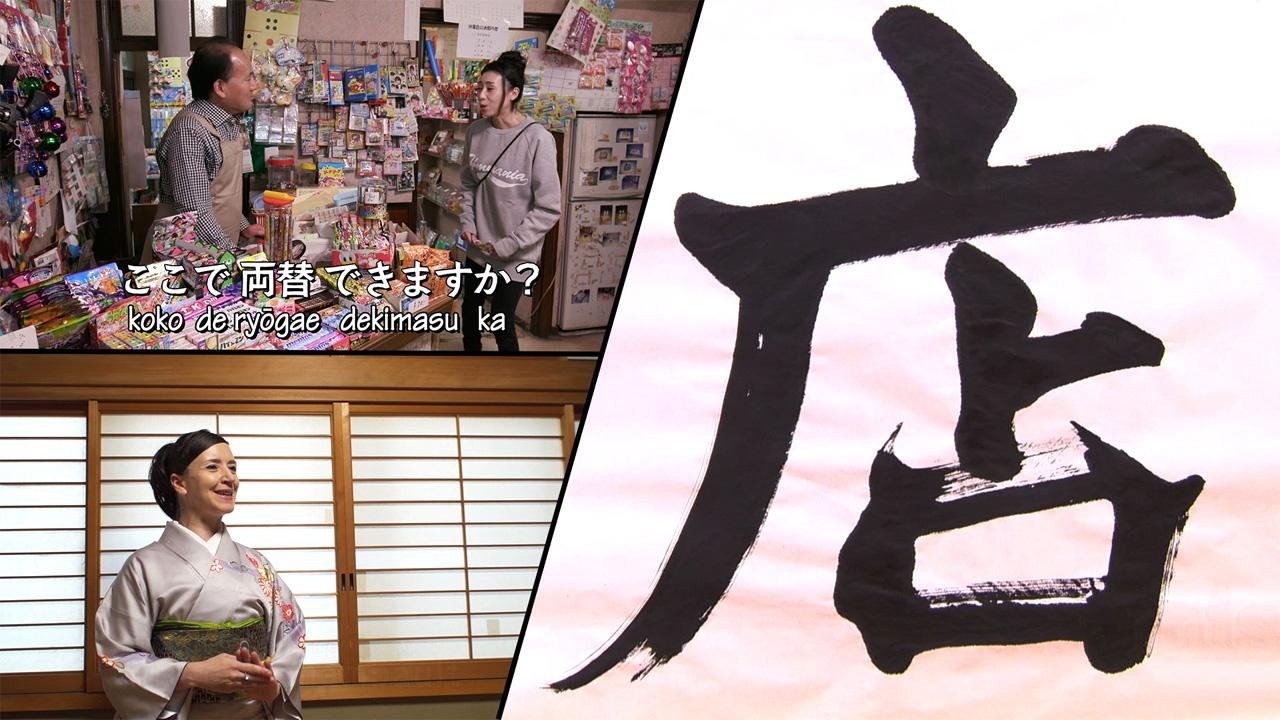
In this episode, we'll learn the phrase "Kokode ryogae dekimasu ka?" "...dekimasu ka?" is a useful expression to use when you want to ask if someone can do something. You can use it when you want to have a large serving in a restaurant or when you want to ask for something's that not on the menu. And for today's kanji, we'll learn about the character for "shop" that we often see on signs in the city.
18Let's go to Tokyo Tower
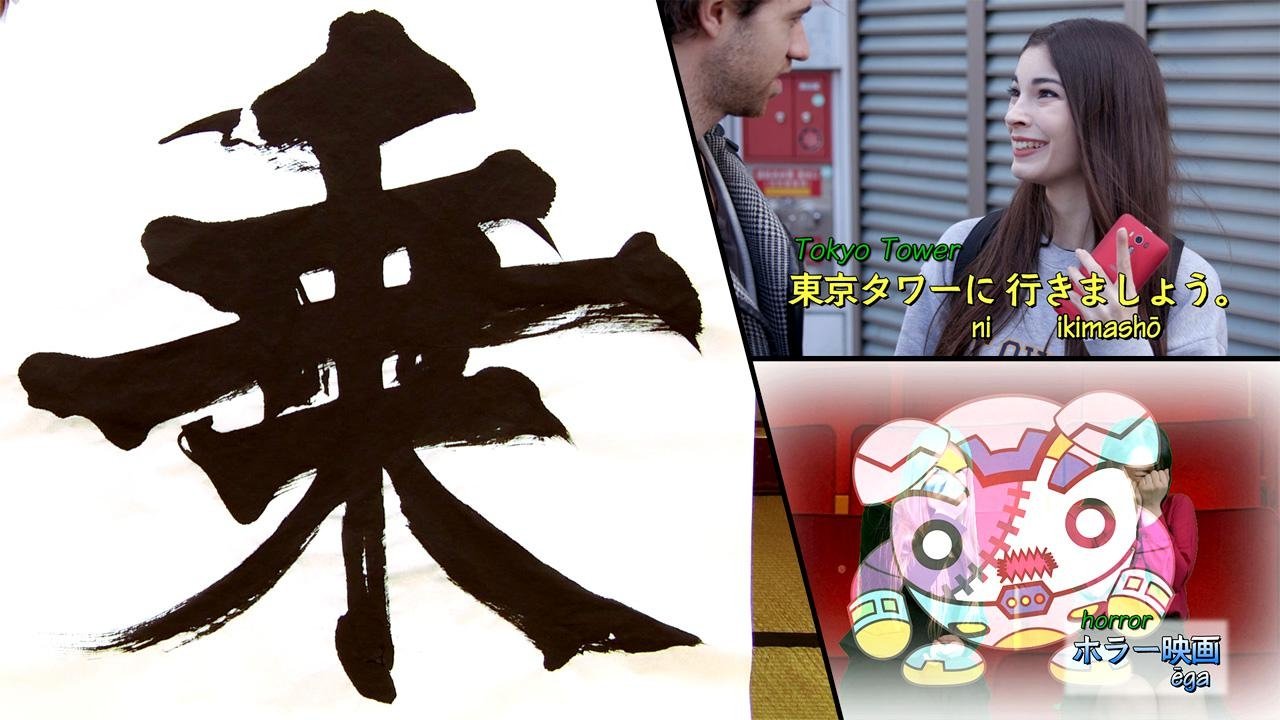
In this episode, we'll learn the phrase "Tokyo Tawa ni ikimasho". This is useful when you want to invite somebody to do something, like inviting someone to go to the movies with you or to go out to dinner. For Today's Kanji, we'll learn the character for "ride".
19I think it's cute
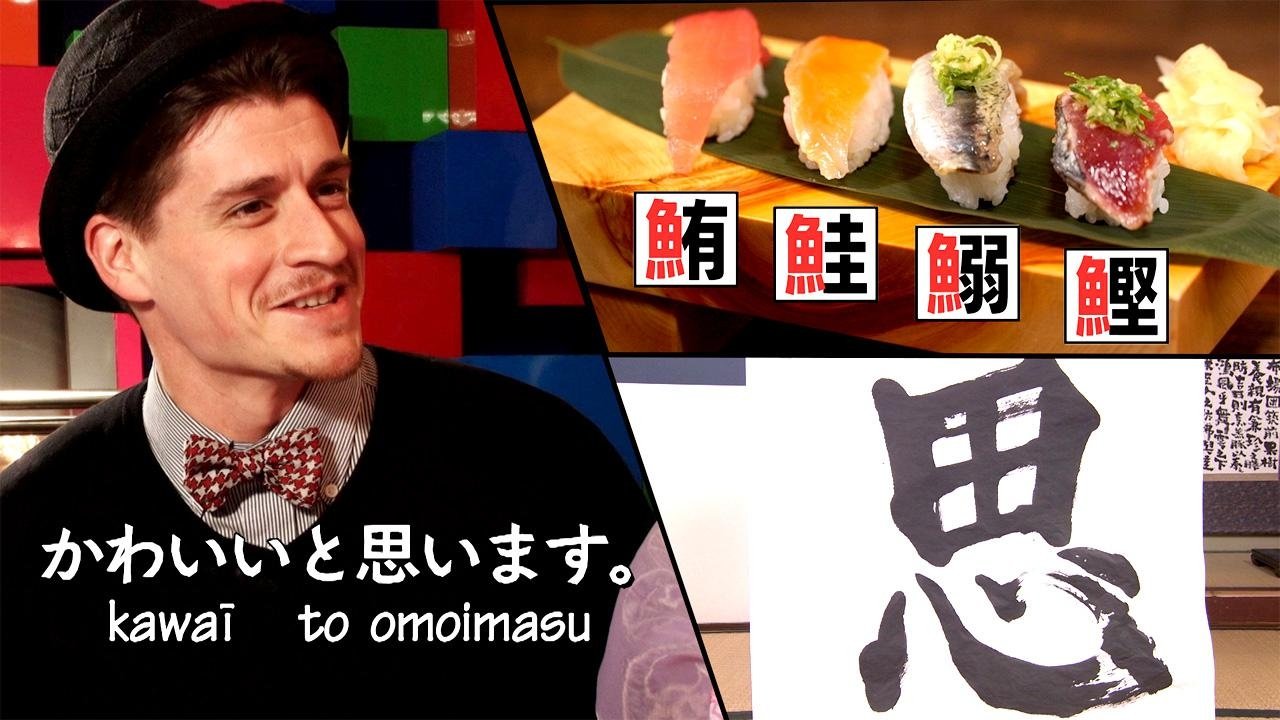
In this episode, we'll learn the phrase "Kawaii to omoimasu". This is a convenient expression that you can use to express your impressions. Just add "to omoimasu" to an adjective like "Kawaii". In the video, pay attention to the conversation of a couple as they go shopping. And for today's kanji, we'll learn about the character for "think".
20This is expensive isn't it?
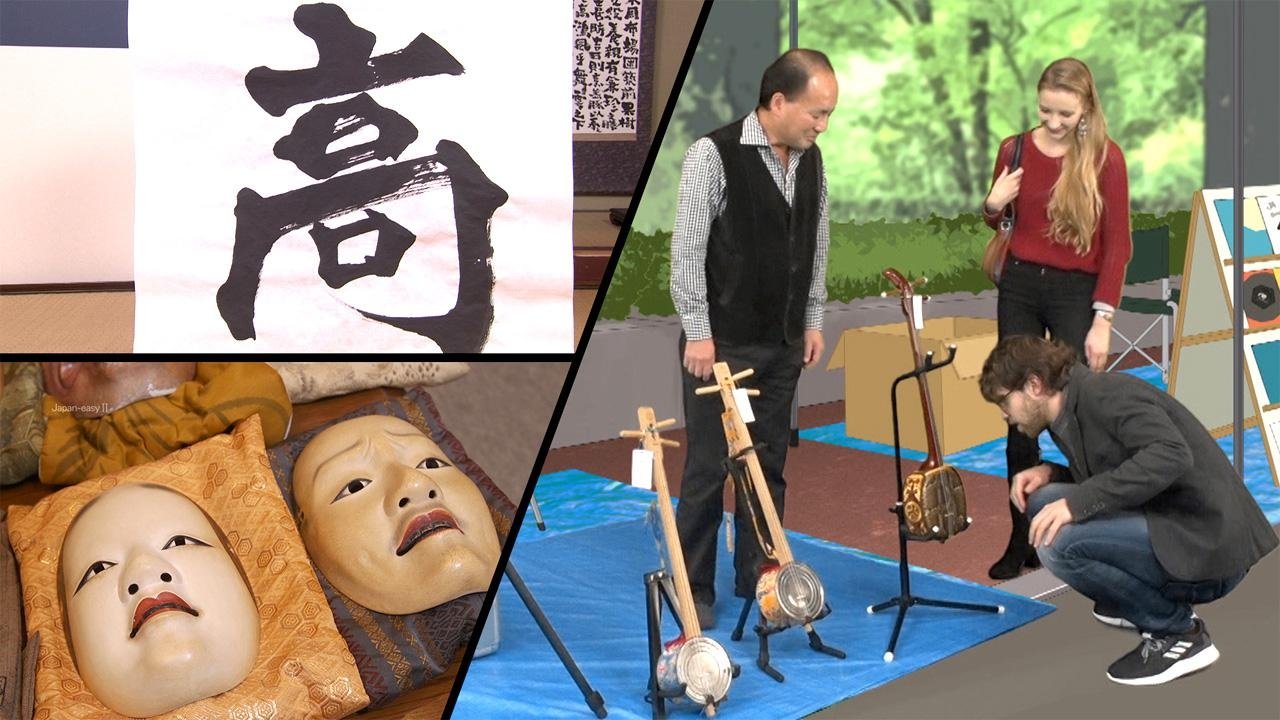
In this episode, we'll learn the phrase "Kore wa takai desu ne". "Kore wa takai desu" means "This is expensive". And when you put "ne" at the end, it becomes an expression used to seek consent or sympathy from the other person. Let's watch the video and pay attention to the change at the end of the sentences. And for today's kanji, we'll learn about the character for "high".
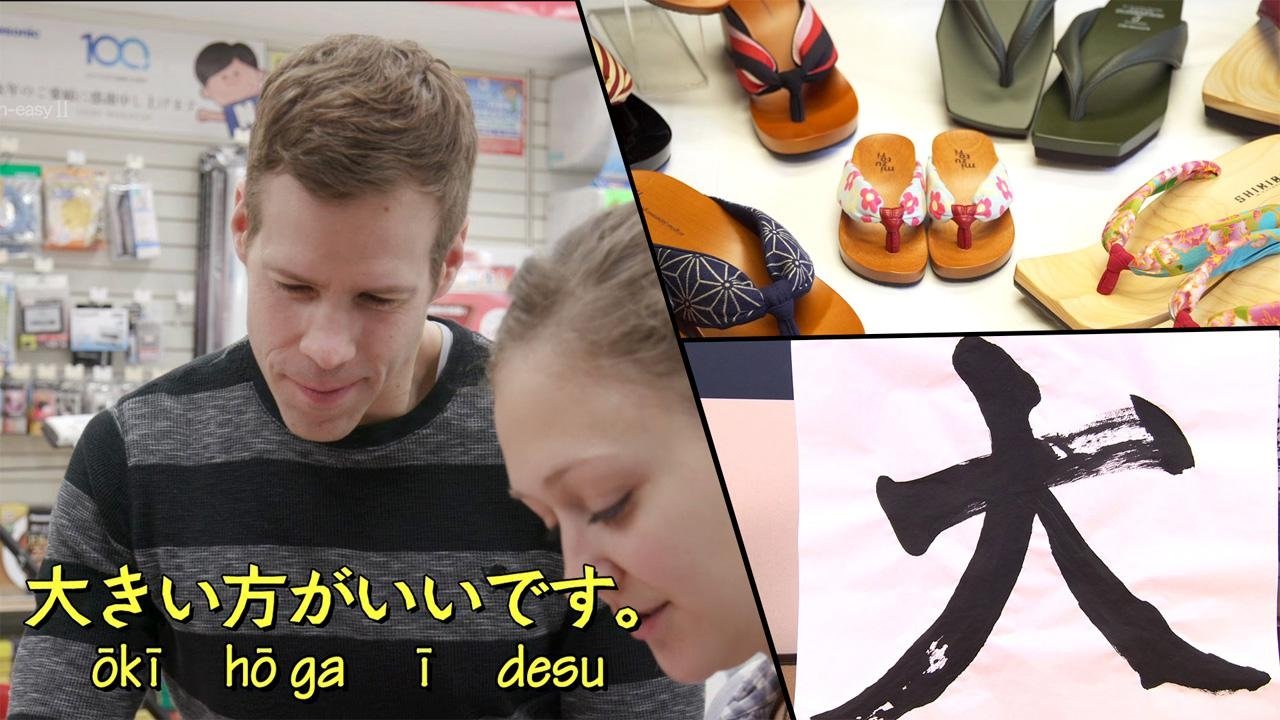
21I like the bigger one
In this episode, we'll learn the phrase "hō ga īdesu". You can use this phrase to choose between 2 items in front of you. For example, you can use it when shopping. You can also use it to make a request. Let's check out the video for details. And for today's kanji, we'll learn the character for "big".
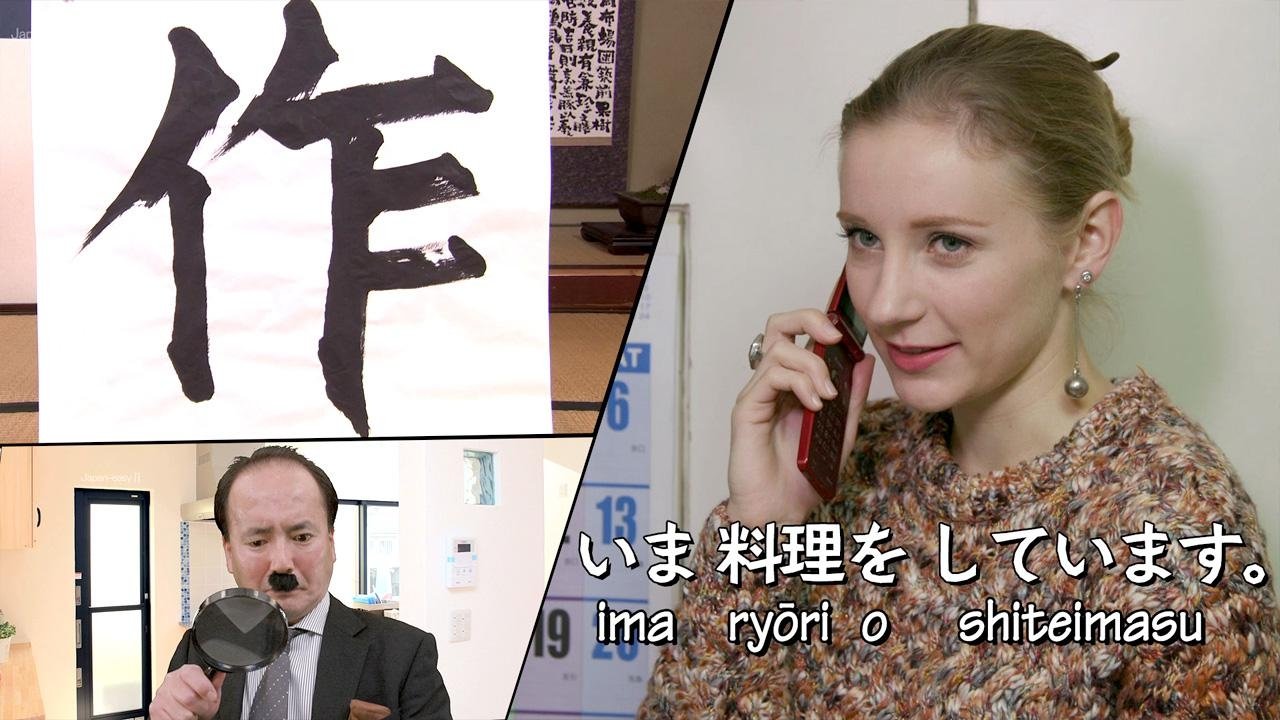
22I am cooking now
In this episode, we'll learn the phrase "teimasu". It's used to express an ongoing action. For example, "ima ryōri o shiteimasu". "Ima" means "now", and "teimasu" is likes the I-N-G verb-ending. First, we start with "shiteimasu", meaning "doing". Let's check out the video, and try to use the phrase. And for today's kanji, we'll learn the character for "make".
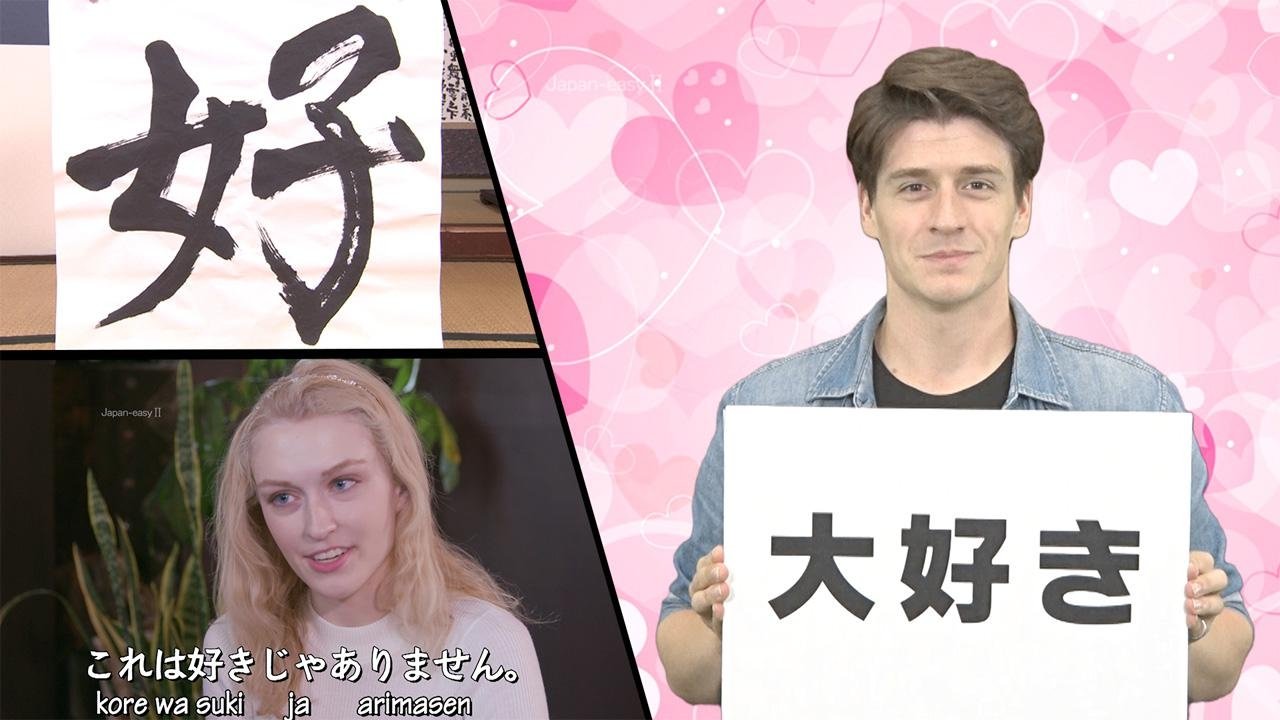
23I don't like this
In this episode, we'll learn the phrase "ja arimasen". This is added to the end of a word to make it a negative. For example, the word for "to like" is "suki". But if we say "suki ja arimasen", it means "I don't like (something)". Let's watch the video clip to get a better understanding. And for today's kanji, we'll learn the character for "like".
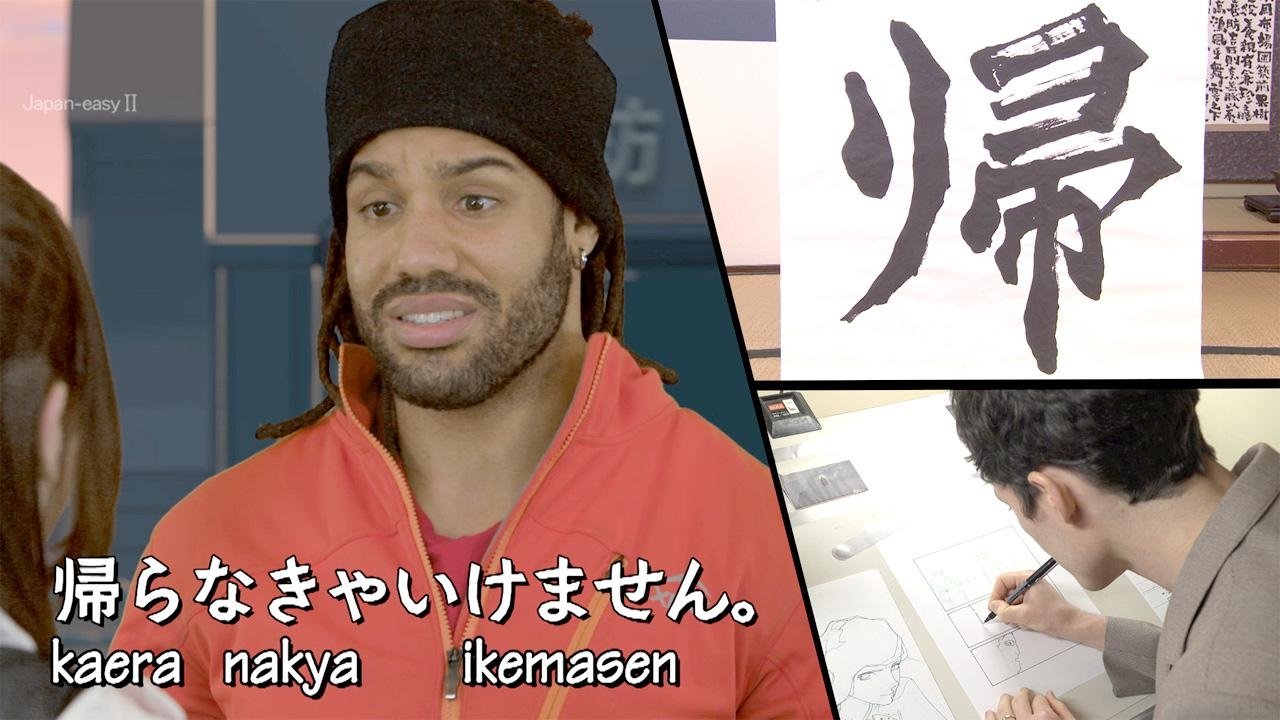
24I have to go homefinale
In this episode, we'll learn how to say "I have to ___" which in Japanese is "___ nakya ikemasen". Since this is the final episode of Japan-easy II, we need to say "kaera nakya ikemasen" which means "I have to go home". And for today's kanji, we'll learn the character for "to go home".